
Overview
This guide summarizes the technical specifications that matter when choosing an Intel Core CPU: core and thread counts, base and turbo clock frequencies, cache size, TDP, integrated graphics and socket compatibility. It uses representative models from our catalog (Comet Lake, Alder Lake, Raptor Lake, Raptor Lake Refresh, Arrow Lake / Core Ultra) so you can compare real examples without marketing claims.
Key specification elements — what they mean
Cores and threads
Core count and threads determine parallel processing capacity. Example formats in our catalog: «8/16» means 8 cores and 16 threads (with hyper-threading/simultaneous multithreading where supported).
Base, Performance and Max Turbo clocks
Manufacturers may list several clock figures: a base or efficiency clock (EC), a performance clock (PC) and a Max Turbo frequency. Higher turbo values indicate the maximum single- or all-core boost under allowed thermal/power limits, while base/EC figures represent sustained clocks under nominal conditions.
Cache
Cache (L2+L3 aggregated as listed) affects latency and throughput for repeated data access. Catalog entries show cache sizes in megabytes (e.g., 12Mb, 30Mb, 36Mb).
TDP and Turbo TDP
TDP (Thermal Design Power) indicates the expected sustained thermal/power envelope (listed as Base TDP). Turbo TDP or higher turbo power figures reflect short-term higher power draw during boost. Use both numbers to size cooling and PSU capacities.
Integrated graphics
Some CPUs include integrated GPU (e.g., Intel UHD 730/770). Models with an «F» suffix omit integrated graphics (e.g., i3-12100F). If you plan to use a discrete GPU, an «F» model can be appropriate.
Socket and platform compatibility
Socket impacts motherboard choice and upgrade paths. Our catalog lists socket types such as SOCKET 1200, SOCKET 1700 (FCLGA1700), and SOCKET 1851 (FCLGA1851). Confirm motherboard chipset and BIOS support before upgrading.
Socket summary found in the catalog
- SOCKET 1200 — used for recent Comet Lake generation models (example: i7-10700KF).
- SOCKET 1700 (FCLGA1700) — common for Alder Lake, Raptor Lake and Raptor Lake Refresh generations (many i3/i5/i7/i9 models in catalog).
- SOCKET 1851 (FCLGA1851) — used by new Arrow Lake / Core Ultra models in our list (Core Ultra 5/7 series).
Representative models from our catalog (translated, factual)
Intel Core i3 examples
- Intel Core i3-12100 — Base 3.3 GHz (EC), Performance 4.3 GHz (PC), Max Turbo 4.3 GHz; Cache 12 Mb; 4 cores / 8 threads; Alder Lake; UHD Graphics Intel® 730; Base TDP 60W; Turbo TDP 89W; FCLGA1700 w/o cooler; OEM; CM8071504651012.
- Intel Core i3-12100F — Base 3.3 GHz (EC), Performance 4.3 GHz (PC), Max Turbo 4.3 GHz; Cache 12 Mb; 4/8; Alder Lake; Base TDP 58W; Turbo TDP 89W; FCLGA1700 w/o cooler; OEM; CM8071504651013.
- Intel Core i3-13100 / i3-13100F — Base 3.4 GHz (EC), Performance 4.5 GHz (PC), Max Turbo 4.5 GHz; Cache 12 Mb; 4/8; Raptor Lake; UHD Graphics Intel® 730 (13100); Base TDP 60W; Turbo TDP 89W; FCLGA1700; OEM.
- Intel Core i3-14100 / i3-14100F — 3.5 GHz; 4/8; Raptor Lake Refresh; Intel UHD770 (14100); 60W; LGA1700; OEM/Tray.
Intel Core i5 examples
- Intel Core i5-12400 / 12400F — Base 2.5 GHz (EC), Performance 4.4 GHz (PC), Max Turbo 4.4 GHz; Cache 18 Mb; 6/12; Alder Lake; UHD Graphics Intel® 730 (12400); Base TDP 65W; Turbo TDP 117W; FCLGA1700; OEM.
- Intel Core i5-12600KF — Base 2.8 GHz (EC), Performance 3.7 GHz (PC), Turbo 3.6 GHz, Max Turbo 4.9 GHz; Cache 20 Mb; 10/16; Alder Lake; Base TDP 125W; Turbo TDP 150W; FCLGA1700; OEM.
- Intel Core i5-13600KF — Base 2.6 GHz (EC), Performance 3.5 GHz (PC), Turbo 3.9 GHz, Max Turbo 5.1 GHz; Cache 24 Mb; 14/20; Raptor Lake; Base TDP 125W; Turbo TDP 181W; FCLGA1700; OEM.
- Intel Core i5-13400 / i5-13500 and Raptor Lake Refresh models such as i5-14400 / i5-14600KF are also listed with their respective cores, clocks and TDPs in the catalog.
Intel Core i7 examples
- Intel Core i7-10700KF — 3.8 GHz (5.1 GHz turbo); 16 Mb cache; 8/16; Comet Lake; 125W; FCLGA1200; Tray; CM8070104282437.
- Intel Core i7-12700 / 12700F / 12700K / 12700KF — examples show hybrid core counts 12/20, Cache 25 Mb; base/turbo frequencies listed per model; Base TDP 65W (non-K) and 125W (K); Turbo TDP up to 190W for K variants; FCLGA1700; OEM.
- Intel Core i7-13700KF / i7-14700 / i7-14700K / i7-14700KF — Raptor Lake and Raptor Lake Refresh entries with cache up to 30 Mb and hybrid core counts up to 20/28; TDPs and clocks listed per model in the catalog.
Intel Core i9 examples
- Intel Core i9-13900F — Base 1.5 GHz (EC), Performance 2.0 GHz (PC), Turbo 4.2 GHz, Max Turbo 5.6 GHz; Cache 36 Mb; 24/32; Raptor Lake; Base TDP 65W; Turbo TDP 219W; FCLGA1700; OEM; CM8071504820606.
- Intel Core i9-14900 / 14900K / 14900KF — Raptor Lake Refresh entries with 24/32 cores/threads, various base/turbo frequencies and 125W nominal TDPs listed per model in the catalog.
Intel Core Ultra (Arrow Lake) examples
- Intel Core Ultra 5 / Ultra 7 series (Arrow Lake) — multiple SKUs in catalog (e.g., Core Ultra 5 225, 230F, 235, 245, 250KF Plus; Core Ultra 7 265, 270K Plus). These list core counts (10C/10T up to 24C/24T), frequencies, and socket FCLGA1851.
How to use these specs when choosing a CPU
- If you need pure multi-threaded throughput (video encoding, rendering), prioritize higher core/thread counts and larger cache.
- For gaming, single-core turbo frequency matters alongside GPU choice; consider K/KF models if you need higher sustained boost and overclocking (check motherboard support).
- If using onboard video for office/multimedia, choose a non‑F SKU with integrated UHD graphics; if you will use a dedicated GPU, F variants are cost-effective.
- Match the socket (1200/1700/1851) to motherboard and confirm BIOS/firmware compatibility before buying.
Internal product links and useful accessories
For a desktop or workstation build, consider compatible furniture and peripherals available on our site:
- Notebook — suitable for mobile workstations and multimedia
- Computer desk — compact desktop surface for a PC build
- Writing desk — larger work surface for dual-monitor setups
Contact our sales team to confirm stock, prices and recommended motherboard pairings for any CPU model listed above.
Quick checklist before purchase
- Confirm socket compatibility (LGA1200, LGA1700, LGA1851).
- Decide if integrated graphics are needed (choose non-F vs F SKU).
- Match TDP to your cooling solution and PSU capacity.
- Review core/thread counts and turbo clocks relative to intended workload.
Related products
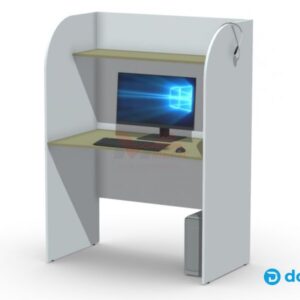
Ноутбук
Ноутбук для кабинета мультимедиа — решение для учебных занятий и презентаций в сочетании с интерактивной партой. Подходит для демонстрации учебного контента, работы…
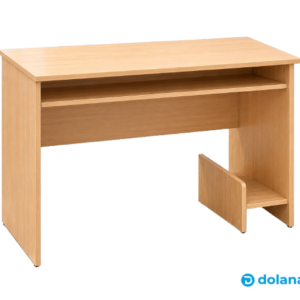
Стол компьютерный
Компактный компьютерный стол 800×600×750 мм из ЛДСП — практичное решение для дома, учёбы и небольшого офиса. Стандартная высота 750 мм, удобная рабочая…
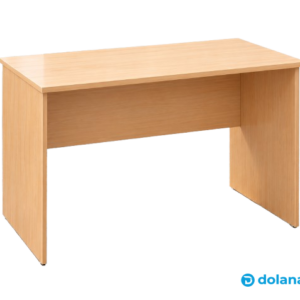
Стол письменный
Письменный стол 1240×600×750 мм из ЛДСП. Компактный и практичный рабочий стол для дома, учёбы и офиса. Доступен в нескольких материалах и цветах;…
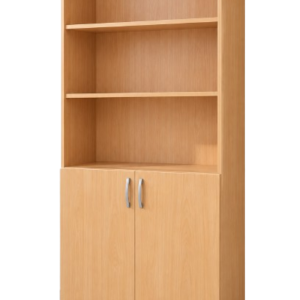
Шкаф для учебно-наглядных пособий
Белый шкаф для учебно-наглядных пособий из ЛДСП с выбором кромки ПВХ (белая, жёлтая, зелёная, синяя) и безопасной ручкой 128 мм. Подходит для…
Frequently asked questions
What is the difference between K, KF and F suffixes in Intel model names?
How do I know which socket I need?
Should I pick a CPU with higher TDP?
Do i3 CPUs support modern features like PCIe and DDR5?
Are Core Ultra (Arrow Lake) models compatible with LGA1700 motherboards?
How do cache sizes affect performance?
Таблица быстрого сравнения (пример)
Таблица для быстрого сравнения ключевых моделей (поместите в виде таблицы на страницу):
Модель — Ядра/Потоки — Турбо (Max) — Кэш — Base/Turbo TDP — iGPU — Сокет
i3-12100 — 4/8 — 4.3 ГГц — 12 МБ — 60W / 89W — Intel UHD 730 — FCLGA1700
i5-13600KF — 14/20 — 5.1 ГГц — 24 МБ — 125W / 181W — нет (F/KF) — FCLGA1700
i9-13900F — 24/32 — 5.6 ГГц — 36 МБ — 65W / 219W — нет — FCLGA1700
(Добавьте ссылки на карточки товаров и обновляйте таблицу при приходе новых SKU, например Core Ultra с FCLGA1851.)